In 2026 the road to Brussels proved extra exciting due to a large scale SNCB strike during the whole last week of January. It was kinda crowded due to all the travelers from the cancelled trains that jumped on board in Cologne and Aachen, but in the end I was among the lucky few whose train didn’t experience any interruptions.
Day 1: Video Shenanigans
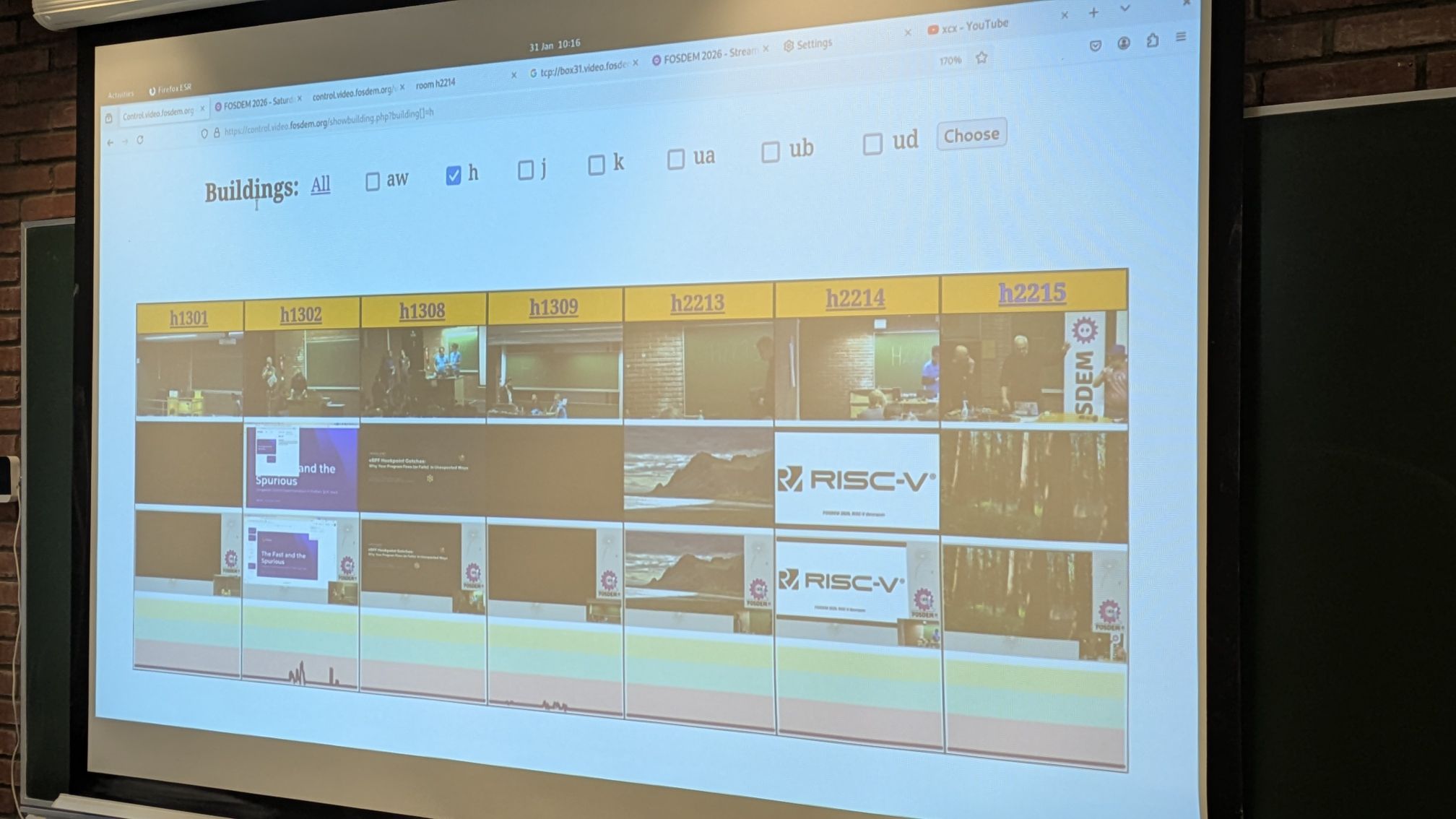
In an effort to give back some more to FOSDEM I had signed up for volunteering on the video team in building H. Why that building? Well it’s the one whose layout I already had internalized from past years so I expected the least friction there.
Note for self: While website states that video folks are supposed to show up at 08:00, it’s kinda pointless in practice to be there that early. 08:30 works too, and you don’t have to cut short the breakfast in the hotel.
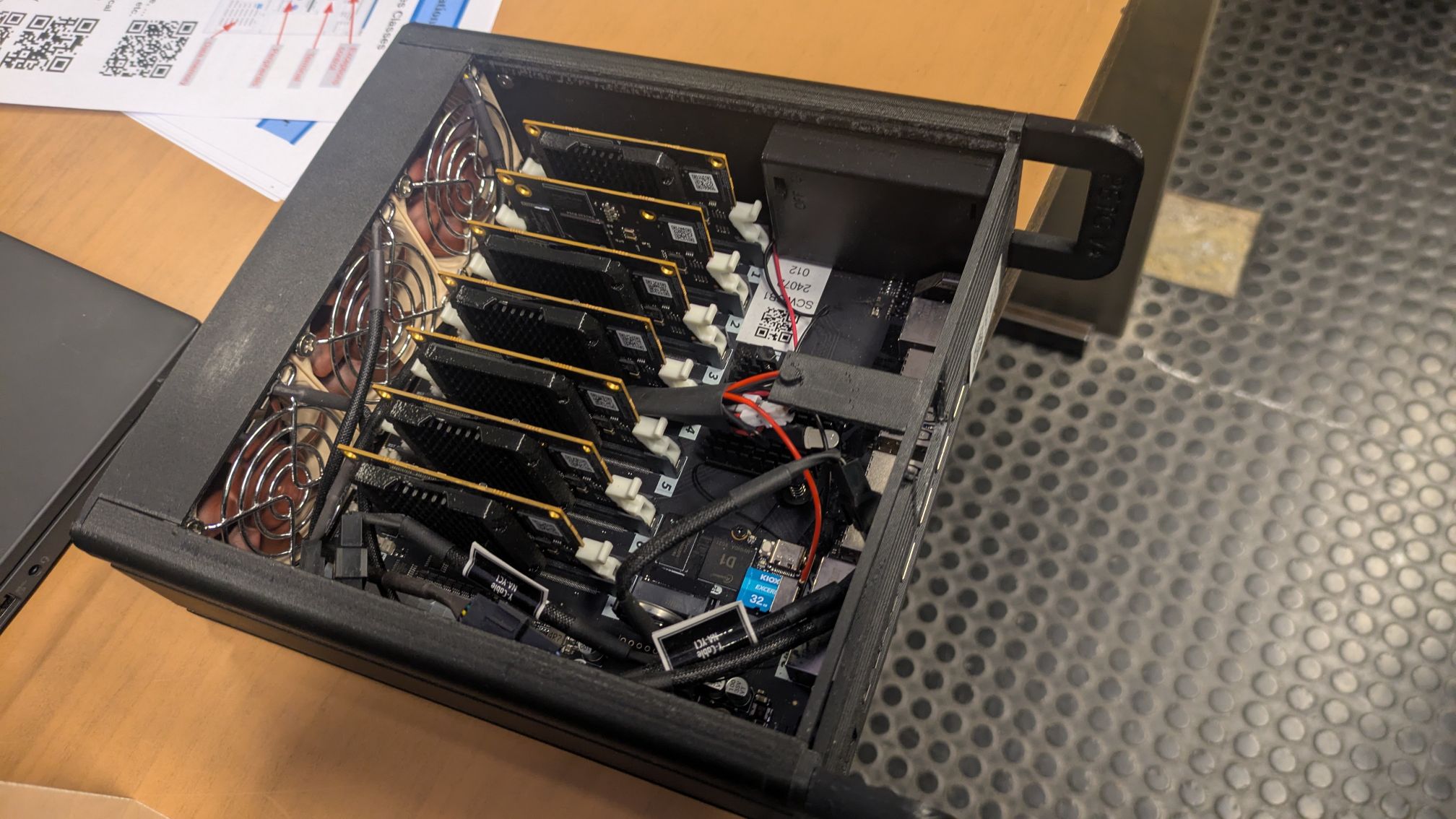
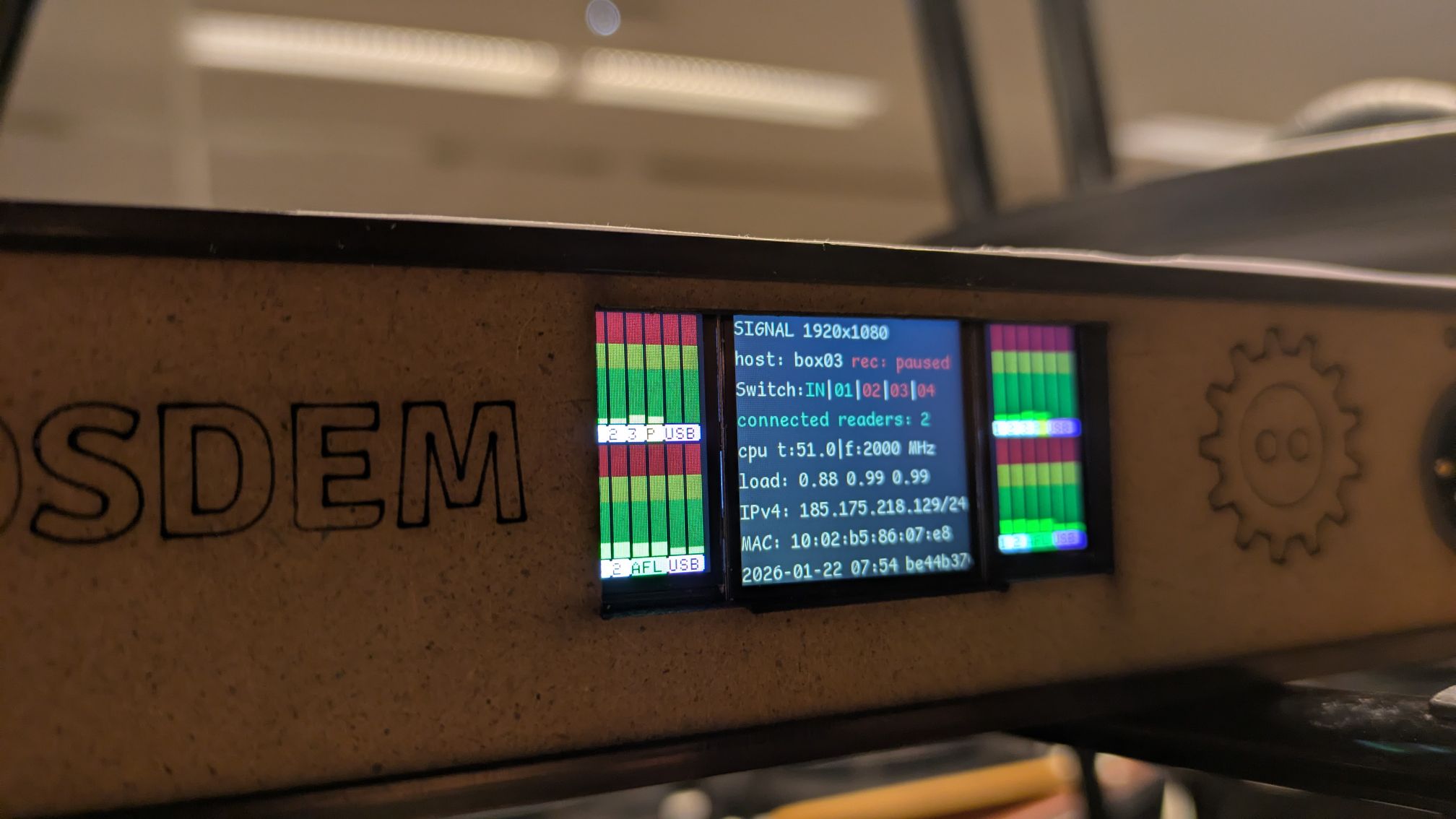
Anyways, arriving at the VOC headquarters for building H I found myself surrounded by a crew of crazy Bulgarians. Most of them were already familiar with the video setup so I received as competent an introduction as I could wish for. Thanks to the amazing work the buildup crews did Friday afternoon it only took an hour or so to get all rooms operational. Most equipment was working flawlessly except for some of the bespoke FOSDEM VOC boxes and -- of course -- the local DNS setup. After that was sorted out things were running smoothly for the rest of the day and we had plenty of time to chat about the usual topics like integrated circuits made of silicon carbide, radiation hardening, and satellite orbits.
Since it was all quiet on the video duty I managed to slip out to go see some interesting talks anyways. Soon I learned that showing up in a devroom while wearing a green shirt isn’t the greatest idea; it may be unsettling to devroom managers as us video guys usually won’t drop by unless there’s a concrete issue to deal with. (Sorry guys from the Network devroom, I didn’t mean to intrude!)
One of the more annoying things I learned while on Video duty is how the central locking system of ULB works (and where it doesn’t!). The video team obviously needs to stay around until the last event of the day has finished and perform some maintenance tasks afterwards like shutting down projectors, ensuring the mic batteries are charged for the next day, and prepping VOC boxes for firmware flashing. This took a while, just a little while too long apparently, and the five of us plus a random conference attendee from Brazil found ourselves locked into building H; luckily the building has a secret back exit, saving us from a cold night on uncomfortable benches.
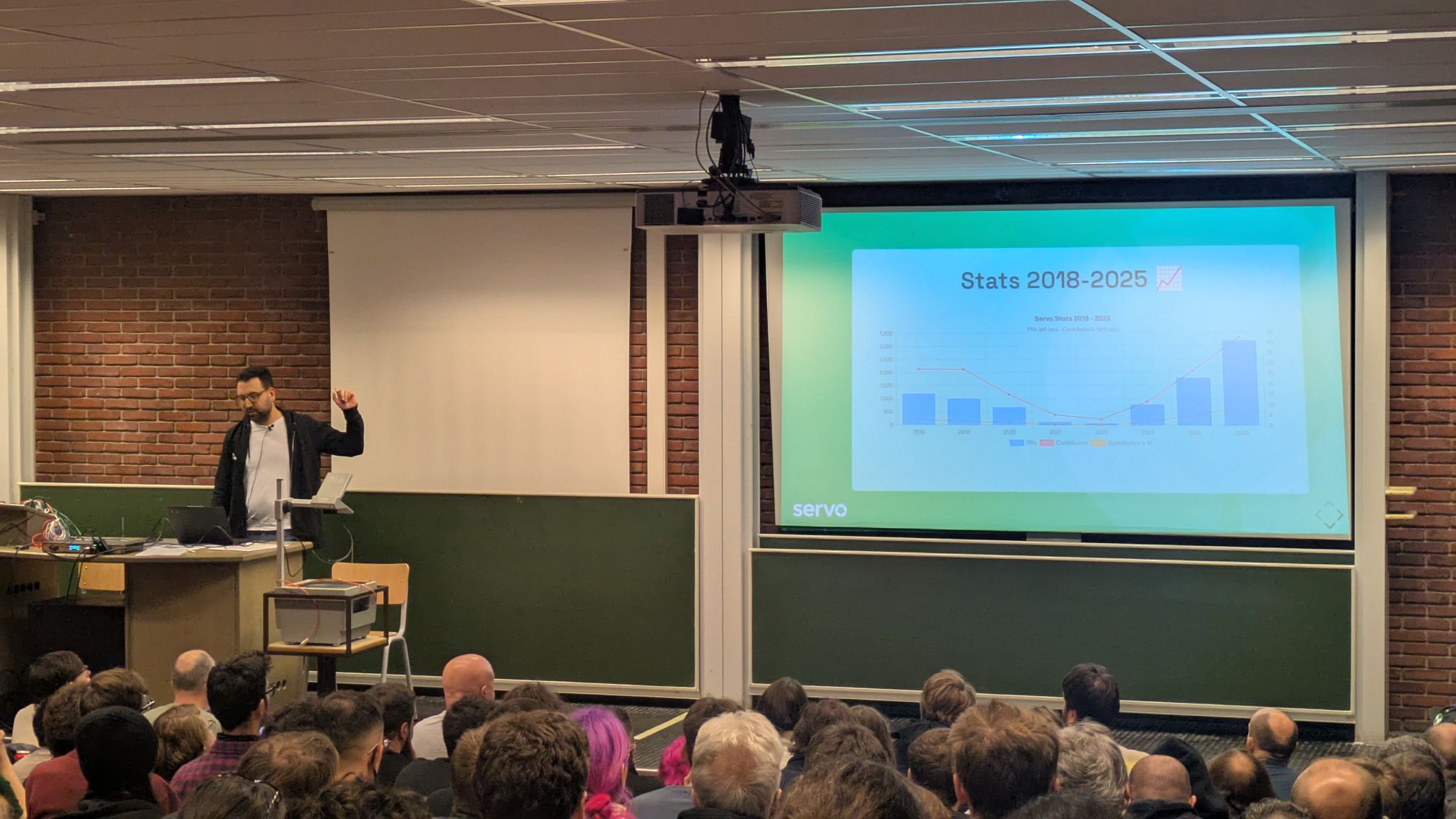
From the talks that I did manage to catch, Manual Rego’s talk on the state of the Servo project was particularly notable. What he had to say about the Servo makes me rather optimistic: development of the rendering engine has picked up quite a bit. These days there’s more velocity behind it than even back in the Mozilla days. Also Servo figures as a living proof-of-concept of the possibility that building new browser engines from scratch is in fact not an unrealistic endeavour (probably referring to Ladybird among others). Which goes to show that Microsoft are outright incompetent for not managing to get their own engine off the ground despite a budget of millions of dollars, settling instead to ship just another Chromium theme.
Day 2a: Conference Experience
Sunday I spent mostly as a regular guest, picking my favorites from the vast schedules to sit back and listen in: in the Rust devroom, Distros devroom and Main Track in particular. Once again the Rust devroom got allocated a large lecture room in building U, which is a true nightmare of acoustics, making presentations in there an ordeal for both speakers and the audience. Dropping this venue entirely would be an enormous improvement to FOSDEM, provided they can find a better replacement.
Of the talks I went to see in person today, there were a few that stood out:
-
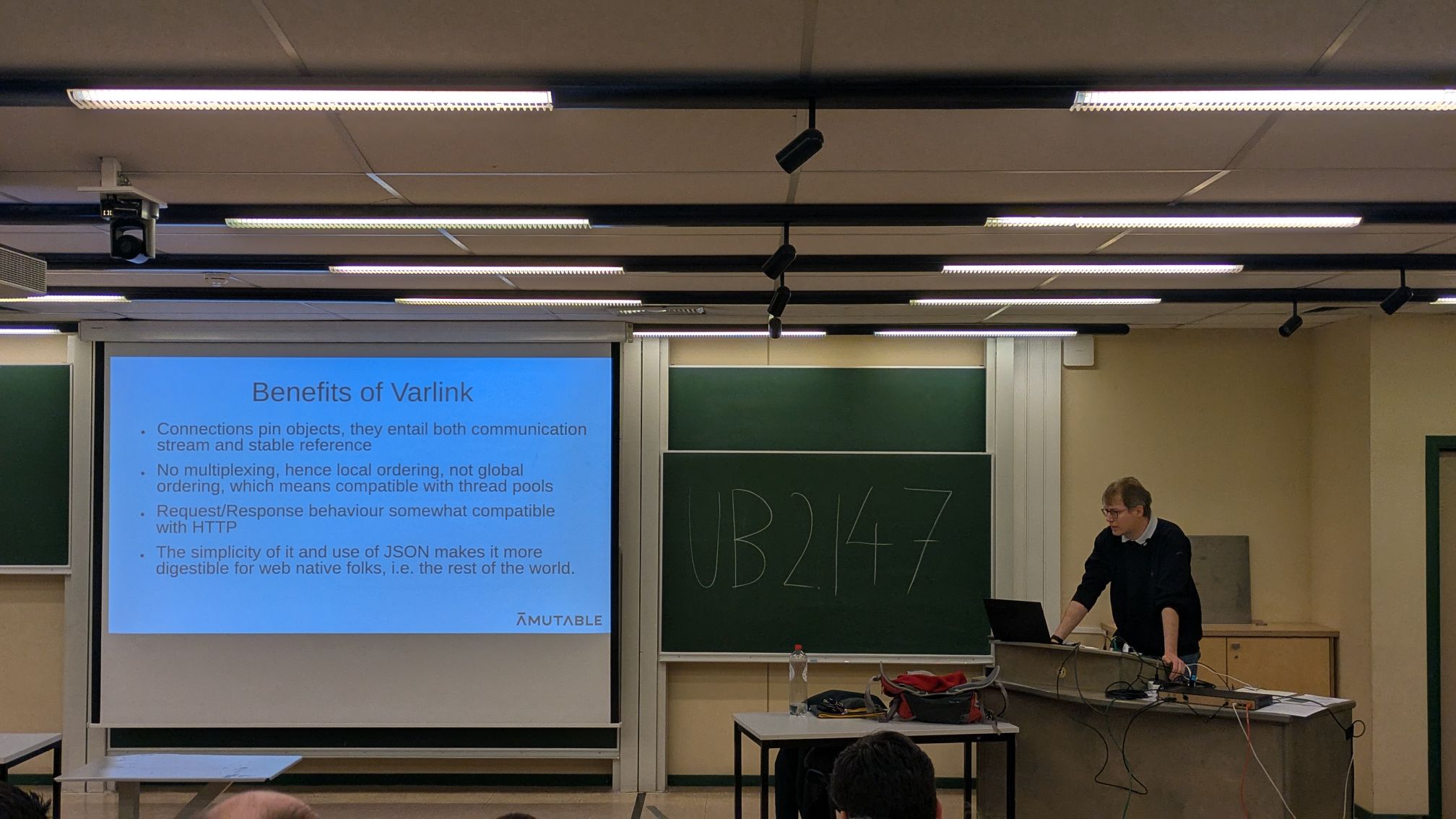
Lennart’s Case for Replacing DBus with Varlink; which I enjoyed in particular after having worked with the Varlink protocol professionally for many years.
-
SuSE’s AIM mechanism, sort of a survey of identity management / SSO infrastructure deployed in a corporate setting.
-
Packaging Rust crates with RPM about dealing with the horrors that Cargo unleashes on system package managers which Fedora’s
rust2rpmtool does a pretty decent job at containing. -
Very entertaining and occasionally terrifying was Sylvestre Ledru’s presentation about
uutilsin which he addressed misconceptions and allegations about the project commonly found in the dark corners of the web.
As always, I went home with a long schedule of talks that I missed, enough to keep me busy watching recordings for the next couple weeks. I’m particularly curious about all the events that figured under the umbrella term “sovereign IT”, as in the current political situation it seems to finally dawn on decision makers that the deeply ingrained dependence on US service providers doesn’t come without significant drawbacks. We’re probably not quite there yet politically but there’s an entire zoo of potential replacements for crappy US cloud services in the making. I wouldn’t be surprised if this area was among the largest growing segments of the IT landscape right now.
Day 2b: Cleanup
Daniel Stenberg’s much anticipated keynote hadn’t even started when behind the scenes the teardown of FOSDEM begun. At 5 p.m. streams of volunteers converged on the main info desk in building K for the assignment cleanup tasks. This year unfortunately I drew the short end of the stick: I got allocated to building U. That building is cursed, the “Overlook Hotel” of ULB, if you will. With its labyrinthine nightmare of a layout it sabotages all intentions of moving around efficiently and distributing work between different parts. Nevertheless, our pack of 10-ish volunteers did a great job at putting things back in order. Judging from the amount of dirt we removed off the staircase to the fifth floor, ULB must have offloaded much of their cleaning to FOSDEM these days. There was so much dust up there it already formed small dunes on the stairs when we arrived.
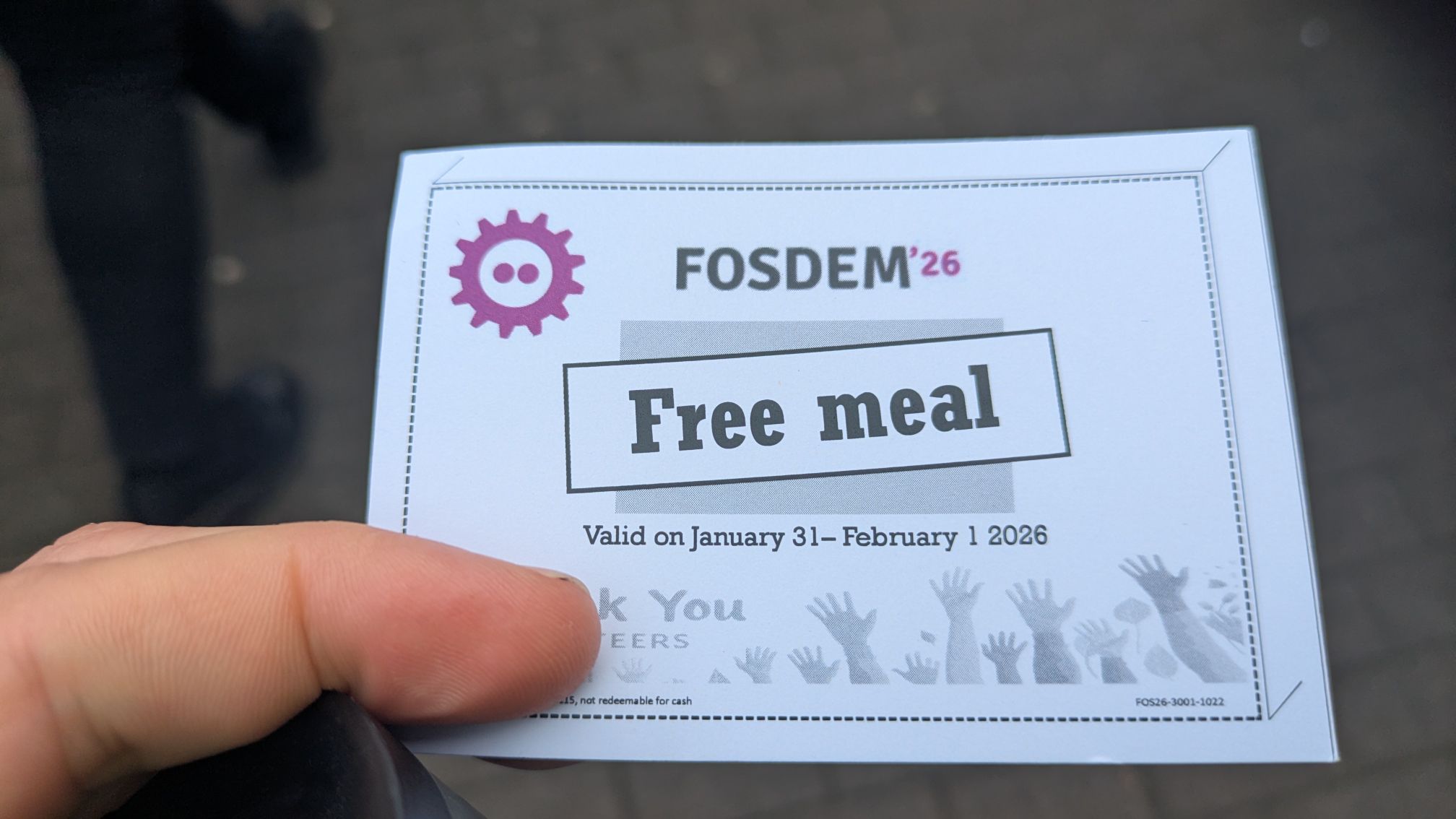
As per usual, building B was the last to finish but we still arrived in K in time for the final packing and of course the volunteers’ dinner. Which was a significant improvement over earlier installments, and this time around there were even vegetarian options! While things were finally winding down at FOSDEM the rain finally set in after a mostly dry and unusually warm winter weekend.
Takeaways
Surprisingly, this time around I spent comparatively little time following the actual program. Between volunteering all of Saturday and facing long queues for most of Sunday, for me this must have been the FOSDEM with the fewest talks that I attended. Which thanks to the excellent work of the video crew isn’t a big issue as for most of the talks there’s a usable recording that will find its way online soon.
Nevertheless I learned a lot, mainly about the conference itself: the video hardware and overall technical setup, how everything is coordinated behind the scenes, how devroom folks and the building teams interact, what an utterly hostile place building U is, etc. And of course FOSDEM thrives on generating random encounters between likeminded people who otherwise would never have met.
gallery